


Concrete Superplasticizer: Improving Workability, Strength, and Concrete Performance
Modern construction requires concrete that delivers the right balance of workability, strength, and durability. Achieving this balance depends not only on the quality of raw materials but also on selecting the right chemical admixtures.
A concrete superplasticizer is an important admixture used to improve the flowability of fresh concrete while reducing the amount of water required to achieve a specific level of workability.
By supporting better mix design and more efficient concrete production, superplasticizers help concrete producers and construction professionals meet the technical demands of modern building projects.
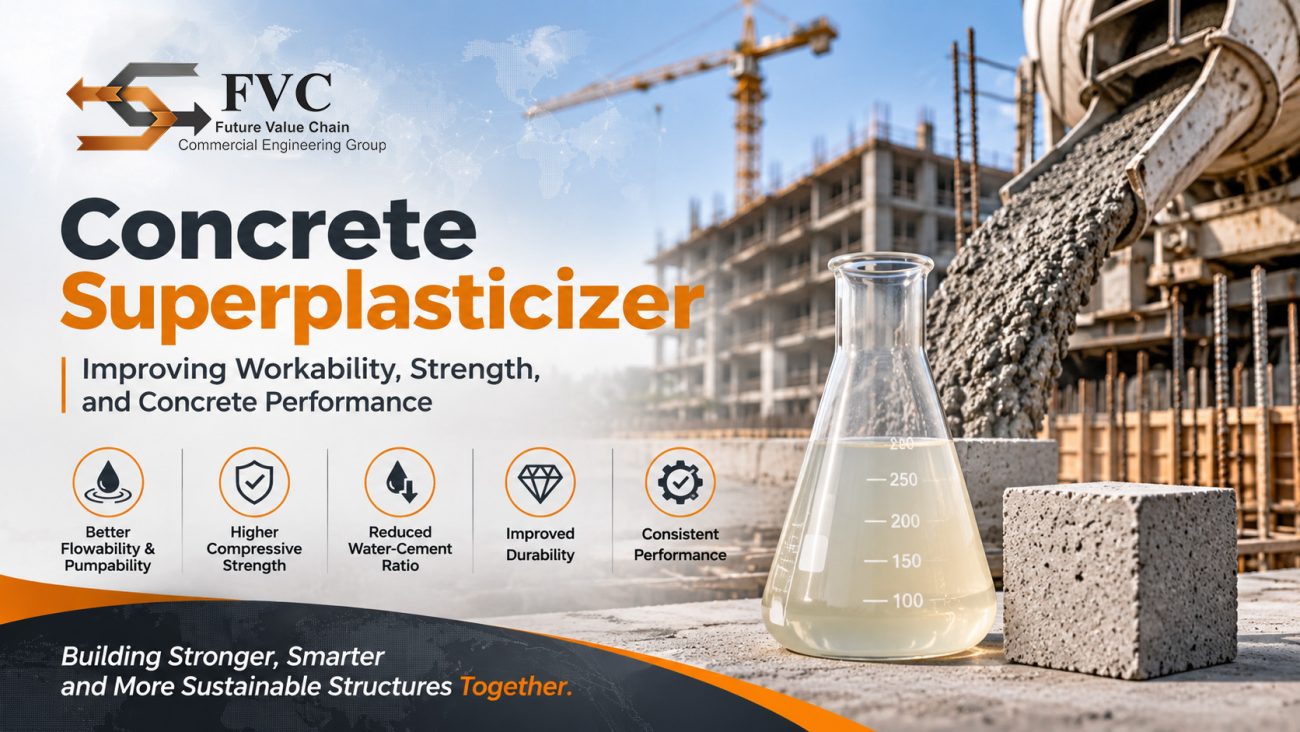
What Is a Concrete Superplasticizer?
A concrete superplasticizer is a high-range water-reducing chemical admixture designed to improve the workability and flow characteristics of fresh concrete.
It works by dispersing cement particles throughout the concrete mixture, reducing particle agglomeration and allowing the mixture to flow more easily.
This enables concrete producers to achieve the required workability with less mixing water. When properly selected and dosed, superplasticizers can also help reduce the water-cement ratio, which may contribute to higher compressive strength and improved concrete durability.
Key Benefits of Using Concrete Superplasticizers
The right superplasticizer can offer several advantages throughout concrete production, transportation, and placement.
1. Improved Workability and Flowability
One of the main benefits of a superplasticizer is its ability to increase the flowability of fresh concrete.
Improved workability allows concrete to move more easily into formwork and around reinforcing steel. This is particularly useful in projects involving complex structures, congested reinforcement, or demanding placement conditions.
Better flowability can also make concrete placement more efficient when the mix is properly designed.
2. Higher Compressive Strength
Concrete strength is influenced by several factors, including the water-cement ratio, cement characteristics, aggregate quality, and curing conditions.
Superplasticizers allow producers to reduce mixing water while maintaining the required workability. With an appropriately designed mix, this reduction in the water-cement ratio can contribute to higher compressive strength.
The final result depends on the complete mix design, material compatibility, admixture dosage, and curing practices.
3. Reduced Water-Cement Ratio
The water-cement ratio is one of the most important factors affecting concrete performance.
Excessive mixing water can increase porosity and negatively affect the strength and durability of hardened concrete.
Superplasticizers help achieve the desired workability without relying on unnecessary additional water. This provides concrete producers with greater flexibility in controlling mix proportions and producing denser concrete.
4. Better Pumpability
Concrete pumping is an essential part of many modern construction projects, particularly in large buildings and structures where concrete must be transported over considerable distances or heights.
A properly designed concrete mixture with suitable flow characteristics can support smoother pumping operations.
Superplasticizers can contribute to improved pumpability by enhancing the flow behavior of fresh concrete. However, aggregate grading, fines content, mix proportions, and equipment conditions also play important roles.
5. Improved Concrete Durability
Concrete durability depends on its ability to resist environmental exposure and the penetration of potentially harmful substances.
A properly designed mixture with a controlled water-cement ratio and a denser internal structure can offer better resistance to permeability-related deterioration.
When used correctly alongside suitable materials and proper curing, superplasticizers can contribute to improved long-term concrete performance.
The Role of Superplasticizers in Modern Concrete Production
As construction projects become more technically demanding, concrete producers need greater control over the properties of both fresh and hardened concrete.
Chemical admixtures provide an effective way to manage these properties and adapt concrete mixtures to different construction requirements.
Superplasticizers can be used in various concrete applications, including conventional structural concrete and mixtures that require enhanced flowability or pumping performance.
The selection of an appropriate product should take into account cement type, aggregate characteristics, environmental conditions, transportation time, placement requirements, and project specifications.
Important Considerations When Selecting a Concrete Superplasticizer
Choosing a superplasticizer requires more than simply comparing product names or general performance claims. The admixture must be compatible with the materials and conditions involved in the concrete production process.
Key considerations include:
Cement compatibility: Different cement types and chemical compositions may affect admixture performance.
Dosage: The recommended dosage should follow the product’s technical specifications and laboratory testing.
Slump retention: Maintaining workability during transportation can be important for projects with longer delivery times.
Environmental conditions: Temperature and weather conditions may influence setting time and admixture behavior.
Trial mixes: Testing the admixture with the actual cement and aggregates is an important step before large-scale production.
Careful evaluation of these factors helps producers achieve more consistent and reliable concrete performance.
International Trade and Supply Opportunities in Concrete Admixtures
Concrete admixtures are an important part of the construction materials supply chain. Access to suitable products, technical awareness, and reliable supplier relationships can support the development of this market.
Future Value Chain (FVC) operates in international trade, sourcing, and business development, connecting markets and supporting commercial cooperation across supply chains.
As demand for specialized construction materials continues to create opportunities for cooperation, FVC aims to build relationships with distributors, contractors, concrete producers, and construction chemical partners in international markets.
Frequently Asked Questions About Concrete Superplasticizers
What is a concrete superplasticizer used for?
A concrete superplasticizer is used to improve the workability and flowability of fresh concrete while reducing the amount of water needed to achieve a specific level of consistency.
What is the difference between a plasticizer and a superplasticizer?
Both are chemical admixtures designed to improve concrete workability and reduce water demand. However, superplasticizers generally provide a greater water-reducing effect or a more significant increase in flowability.
Can a superplasticizer increase concrete strength?
A superplasticizer can help increase compressive strength by allowing a lower water-cement ratio while maintaining suitable workability. The actual result depends on mix design, material quality, dosage, and curing conditions.
Does a superplasticizer improve concrete durability?
When used appropriately, a superplasticizer can contribute to improved durability by helping reduce the water-cement ratio and produce a denser concrete structure. Proper mix design and curing remain essential.
How do you select the right superplasticizer?
Selection should be based on cement type, aggregate properties, mix design, project requirements, environmental conditions, and transportation time. Laboratory testing with the actual materials is recommended.
Building Stronger and More Efficient Concrete Solutions Together
Modern construction depends on reliable materials and effective technologies. Concrete superplasticizers play an important role in improving workability, managing water consumption, and supporting the production of high-performance concrete.
Future Value Chain (FVC) welcomes cooperation with distributors, contractors, concrete producers, and construction chemical partners worldwide.
If you are looking for opportunities in the international supply and trade of concrete admixtures, connect with our team to explore potential cooperation.
Connecting Markets, Creating Value.